


Can a DEXA scan show cancer?


GetScannedToday
No. A DEXA scan measures how dense your bones are; it is not designed to look for cancer and cannot rule it out.
If cancer is the worry, a normal DEXA result tells you nothing either way. Symptoms or concerns about cancer need a separate clinical assessment.
What a DEXA scan actually measures
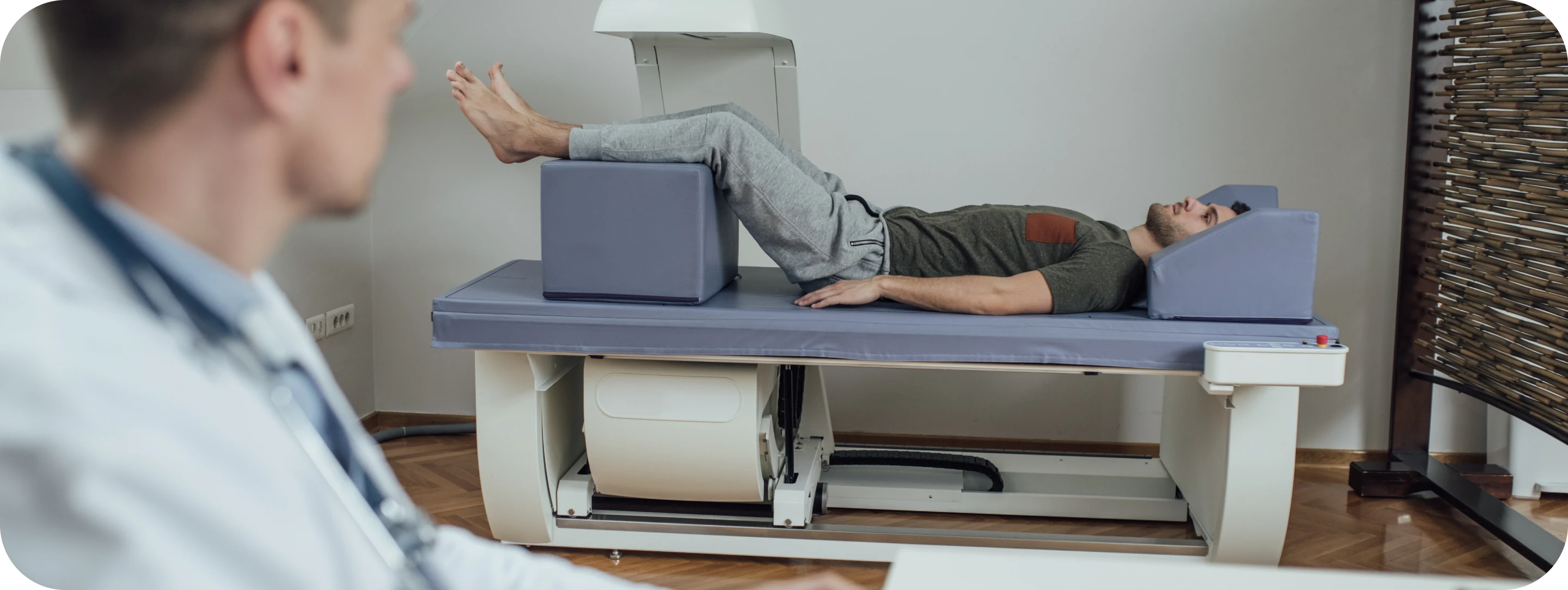
DEXA, also written DXA, stands for dual energy X-ray absorptiometry. The NHS explains that it uses low dose X-rays to show how dense, or strong, your bones are, and that it is often used to diagnose osteoporosis or assess the risk of it.
The way it works explains why it is the wrong tool for cancer. Detectors in the machine measure how much radiation passes through your bones and send that information to a computer. The computer then compares your bone density with that of a young healthy adult, or an adult of your own age, sex and ethnicity. The output is essentially a set of numbers about bone strength, not a detailed picture built to show soft tissue or growths.
The government’s own position sets the same boundary. In a statement published on 30 March 2026, the Department of Health and Social Care listed the permitted medical uses of DEXA. These are diagnosing osteoporosis and osteopenia, assessing fracture risk, clinically evaluating vertebral and atypical thigh bone fractures, monitoring how well treatment is working, and medical research. Cancer investigation is not on that list.
Can a DEXA scan ever pick up something unexpected?
Occasionally, yes, but that is not the same as screening. The government’s 2026 consultation on non-medical DEXA notes that scans may reveal incidental abnormalities, such as metastatic lesions, vertebral fractures or calcium in blood vessels. The consultation raises this as a risk to be managed, not as a benefit of the test.
So if a DEXA report mentions something unusual, it is a reason for a clinician to arrange the right follow up test. It is not a cancer diagnosis, and its absence is not reassurance.
When low bone density leads to further questions
There is one indirect link worth understanding. When bone density turns out lower than expected, doctors may look for an underlying reason. NICE lists a wide range of causes of secondary osteoporosis. These include coeliac disease, an overactive thyroid, rheumatoid arthritis, chronic kidney disease and, among blood conditions, multiple myeloma. Most of these are not cancers, and the DEXA scan itself does not identify any of them. It simply raises the question of why the bones are thinner than expected, which a doctor then answers with other tests.
Why DEXA may come up during cancer care
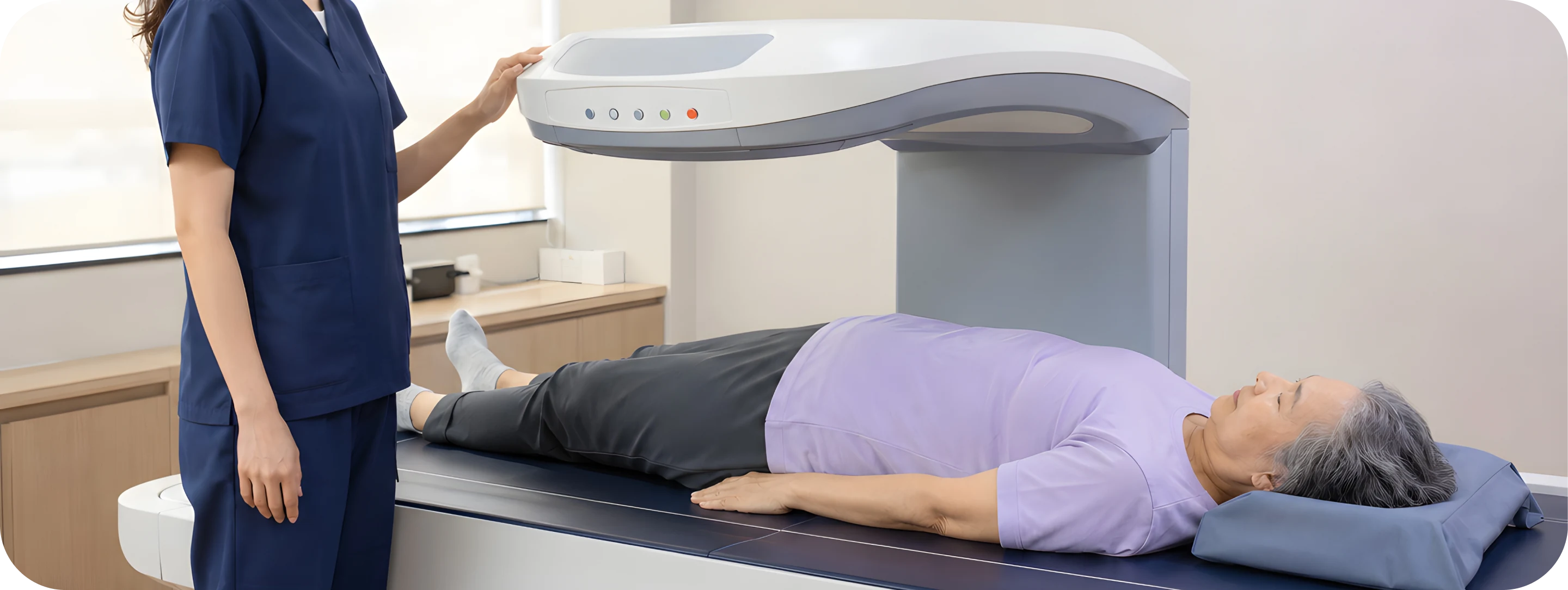
People being treated for cancer are sometimes offered a DEXA scan, and it is easy to assume it is checking the cancer. It is not.
Some cancer treatments can thin the bones. NICE guideline CG146 advises clinicians to consider measuring bone density with DXA before starting treatments that may rapidly harm it, giving sex hormone deprivation for breast or prostate cancer as an example. In that setting, the scan answers a question about bone health during treatment, so that thinning can be spotted and managed.
What to do if cancer is the concern
Do not treat a DEXA result as an answer to a cancer worry, even a normal one. Speak to a GP instead.
The NHS advises seeing a GP if you have pain or tenderness in a bone, particularly if it is worse at night, or if bone or joint pain is making it hard to move around. Less common symptoms of bone cancer listed by the NHS include extreme tiredness, fever and sweating, and losing weight without trying. The NHS also stresses that you might not have bone cancer, but a GP should still check your symptoms.
A broken bone after a minor fall deserves a particular mention. The NHS describes a fracture as a very rare symptom of bone cancer. Far more often, it points to weak bones, and NICE lists a previous fragility fracture as a reason to assess fracture risk. That is a question DEXA is designed to help answer.
If you have, or have had, cancer
New back or neck pain needs prompt attention if you have a history of cancer, because cancer can occasionally spread to the spine. Contact your cancer team rather than waiting for a routine appointment.
Call 999 or go to A&E if that pain comes with numbness, weakness in your legs, difficulty walking, or problems controlling your bladder or bowels. NICE guidance treats these neurological symptoms in people with cancer as a reason to contact the specialist spinal cord compression coordinator immediately.
Booking a bone density scan
For information about a bone density appointment, see the GetScanned private DEXA scan page. That page covers booking and preparation for a bone density scan; it is not a way to check symptoms or investigate a cancer concern.
References
Department of Health and Social Care. (2026a, March 30). Use of dual energy x-ray absorptiometry (DEXA) scans: Government position. GOV.UK. https://www.gov.uk/government/publications/use-of-dual-energy-x-ray-absorptiometry-dexa-scans-government-position/use-of-dual-energy-x-ray-absorptiometry-dexa-scans-government-position
Department of Health and Social Care. (2026b, March 30). Using dual energy x-ray absorptiometry (DEXA) scans for non-medical purposes as a justified practice [Consultation document]. GOV.UK. https://www.gov.uk/government/consultations/using-dual-energy-x-ray-absorptiometry-dexa-scans-for-non-medical-purposes-as-a-justified-practice/using-dual-energy-x-ray-absorptiometry-dexa-scans-for-non-medical-purposes-as-a-justified-practice
National Institute for Health and Care Excellence. (2012). Osteoporosis: Assessing the risk of fragility fracture (Clinical guideline CG146). https://www.nice.org.uk/guidance/cg146/chapter/Recommendations
National Institute for Health and Care Excellence. (2023, September 6). Spinal metastases and metastatic spinal cord compression (NICE guideline NG234). https://www.nice.org.uk/guidance/ng234
NHS. (2022, October 5). Bone density scan (DEXA scan). https://www.nhs.uk/tests-and-treatments/dexa-scan/
NHS. (n.d.). Symptoms of bone cancer. https://www.nhs.uk/conditions/bone-cancer/symptoms/
Take a look at our news and articles

Frequently asked questions
Do I need a GP-referral?
No prior GP-referral is required. Booking with us includes a GP phone consultation and referral. Shortly after booking you will be contacted by a GP from our team who will discuss your scan and provide a referral.
How long is an MRI scan?
MRI scans generally take a bit longer than other types of scans. Individual scans take 10-30 minutes depending on the body part being scanned, overall it can take anywhere from 15 minutes to 90 minutes. You do have to lay very still for an MRI and if there is movement the scan may need to be repeated which can add some additional time.
What’s included in my booking?
With your GetScanned booking, you will receive:
- A pre-scan phone consultation with a member of our medical team.
- A referral for the scan.
- Scheduling of a private MRI scan at your preferred scanning centre.
- Access to your written report by a radiologist.
- Access to your scan images (online and downloadable).
How much is a private MRI scan?
A private MRI scan cost varies depending on the part of the body being scanned and the location the scan is performed. Generally, a private MRI scan in the UK starts at around £350, and includes the scheduling, scan itself and results.
What’s the difference between an open and closed MRI?
Closed MRI machines are the traditional and first type of MRI. They are used more frequently because they provide higher quality images, however they aren’t ideal for certain types of scan or when the patient has limited mobility. Open or wide-bore MRI machines don’t involve lying in a tight cylinder, instead they have wider openings with more space and are therefore considered better if you suffer from claustrophobia. A standing MRI or upright MRI is a new type of open MRI that allows the patient to be in various different positions, including weight bearing positions. If you would prefer an open MRI please filter by MRI type to find an open MRI near you, but please be aware it is only available at certain locations.

Still have questions?
Can't see an answer to your question? Our friendly customer care team are happy to help.
